
View-First Design: Orienting Rooms Around Niagara’s Scenery
- Thomas De Simone
- Oct 8, 2025
- 4 min read

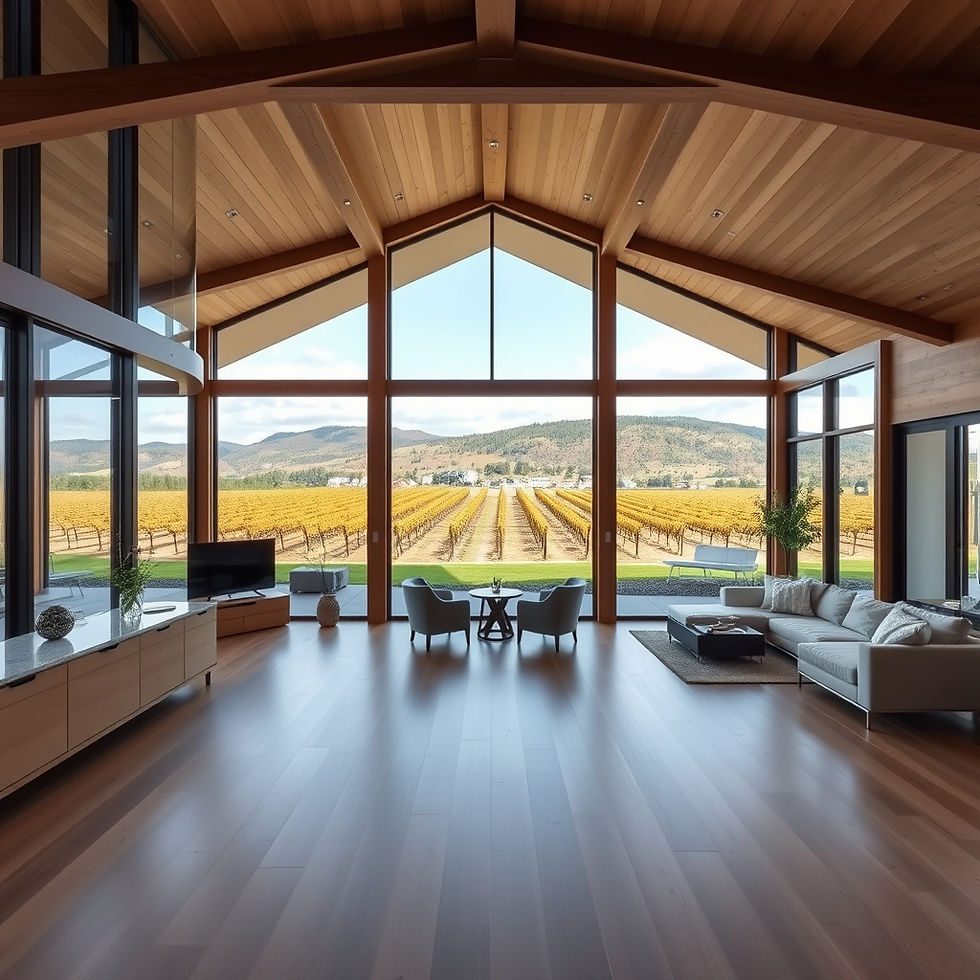
Few places in Ontario rival the Niagara Region’s breathtaking mix of escarpment cliffs, lush vineyards, and tranquil river valleys. It’s no wonder that homeowners here want to celebrate those views in every corner of their home. “View-first design” is the art of orienting architecture, windows, and interior spaces to connect with the outdoors—turning every glance into a moment of beauty.
Whether you’re building new or renovating, thoughtful design choices can make nature the focal point of your home while balancing comfort, energy efficiency, and functionality.
1. Start With Site Orientation
The foundation of a view-first home begins long before walls go up. The way your house sits on the land defines what you’ll see—and how you’ll experience it.
In Niagara, properties can face diverse directions: lakefront vistas along Lake Ontario, escarpment lookouts, vineyard slopes, or serene forest edges. To maximize these natural features:
Study the sun path. Morning light from the east brings warmth and vitality to kitchens and breakfast areas. Western exposures capture glowing sunsets but can create heat gain—best balanced with overhangs or shading solutions.
Position key rooms toward the best view. Living rooms, primary suites, and dining areas deserve the prime sightlines. Service zones—like laundry, garages, or bathrooms—can occupy the less scenic sides.
Use landscape elements to frame. Even if the view isn’t dramatic, you can enhance it through landscaping—planting trees to frame the horizon or directing sightlines toward garden focal points.
A well-oriented layout creates harmony between the home and its setting, blending architecture into the rhythm of Niagara’s changing light and seasons.
2. Windows as Portrait Frames
Windows are the most powerful tools in view-first design—they frame the outdoors like living art. The trick is finding the balance between beauty, proportion, and energy performance.
Consider these design principles:
Vary the window heights. A mix of tall picture windows, clerestory strips, and lower awning windows maintains visual connection whether you’re standing, sitting, or relaxing.
Corner glazing. Frameless or mitered corner glass creates a breathtaking panoramic effect—perfect for overlooking vineyards or escarpment slopes.
Sliding glass walls. Systems like lift-and-slide doors or accordion walls erase boundaries entirely, transforming patios into living extensions of the home.
High-performance glass. Opt for Low-E coatings and triple-pane glazing to maintain comfort and energy efficiency during Ontario’s cold winters and humid summers.
A window isn’t just an opening—it’s an architectural frame that defines the way you experience nature’s art.
3. Align Interior Layouts With the View
Once your orientation and window placements are defined, the interior layout should follow the same visual logic. The goal: to create natural movement toward the view without distraction.
Design strategies include:
Open floor plans that flow toward light. Arrange major walkways and furniture groupings so your eye—and your movement—flow toward the best sightlines.
Consistent sightlines. Use interior doorways and framed openings that align along the same axis as exterior windows, creating layered views that pull the eye outward.
Lower-profile furnishings. Choose sofas and tables that don’t block window frames or visual flow. Opt for neutral tones to keep focus on the scenery rather than décor.
Reflective surfaces. Subtly incorporate mirrors or glass elements opposite windows to bounce natural light deeper into the space, creating the illusion of expanded views.
Good design gently directs your attention, guiding you toward the outdoors without ever feeling forced.
4. Capture Outdoor Living Potential
In Niagara, outdoor living is an essential part of home design—from sipping wine on a veranda to dining under a pergola. Integrating these spaces enhances both lifestyle and property value.
Extend indoor materials outward. Use similar flooring or ceiling finishes to visually connect interiors and exteriors.
Define covered transitions. A covered porch or screened room bridges the home and garden—perfect for Niagara’s unpredictable weather.
Use view-friendly railings. Opt for tempered glass or cable systems that preserve your sightline rather than obstructing it.
Frame the experience. Whether it’s a firepit overlooking vineyards or a seating nook beside a pond, design outdoor zones that act as visual anchors from inside the home.
Outdoor integration turns a great view into a daily experience—where living space and landscape truly merge.
5. Respect Regional Character
Each corner of Niagara offers its own scenic identity, and your design should celebrate that uniqueness.
In the Escarpment area, orient toward dramatic height and forest edges. Use stone, wood, and earth tones that harmonize with the rugged natural setting.
In wine country (Niagara-on-the-Lake, Jordan, Beamsville), celebrate openness and rolling horizons. Choose generous glazing and breezy layouts that echo vineyard expanses.
Near the Niagara River or Lake Ontario, design to capture water reflections and breezes. Elevated decks and coastal materials help resist humidity while keeping views unobstructed.
Regional sensitivity ensures your home feels authentically of its place—not just placed there.
6. The Cost vs. Value Perspective
View-first design may involve higher upfront costs—especially for large window systems or structural modifications. But the long-term return is undeniable.
Resale appeal: Homes designed around views command premium prices in the Niagara market.
Energy efficiency: Strategic window placement and orientation reduce artificial lighting needs and HVAC costs.
Lifestyle value: Natural light and outdoor connection contribute to mental well-being and comfort—benefits that extend far beyond resale figures.
Investing in your view is ultimately an investment in daily quality of life.
Final Thoughts
A well-designed home doesn’t just contain beautiful views—it lives with them. By orienting your rooms, windows, and furniture around Niagara’s iconic scenery, you create a space that celebrates the essence of where you live. Whether you’re gazing at a vineyard sunrise or the golden glow of the Escarpment at dusk, every moment becomes a connection to nature’s artistry—and a reminder that great design begins with what lies just outside your window.


Comments